
Recent Posts
- Province comparison: Ontario vs British Columbia for business
- Taxes for Non-Resident Business Owners in Canada
- How to Open a Company Bank Account in Canada Remotely?
- Is Canada Good for Indian Entrepreneurs?
- Canada Business Visa vs Startup Visa (Difference)
- Documents Required to Start a Business in Canada
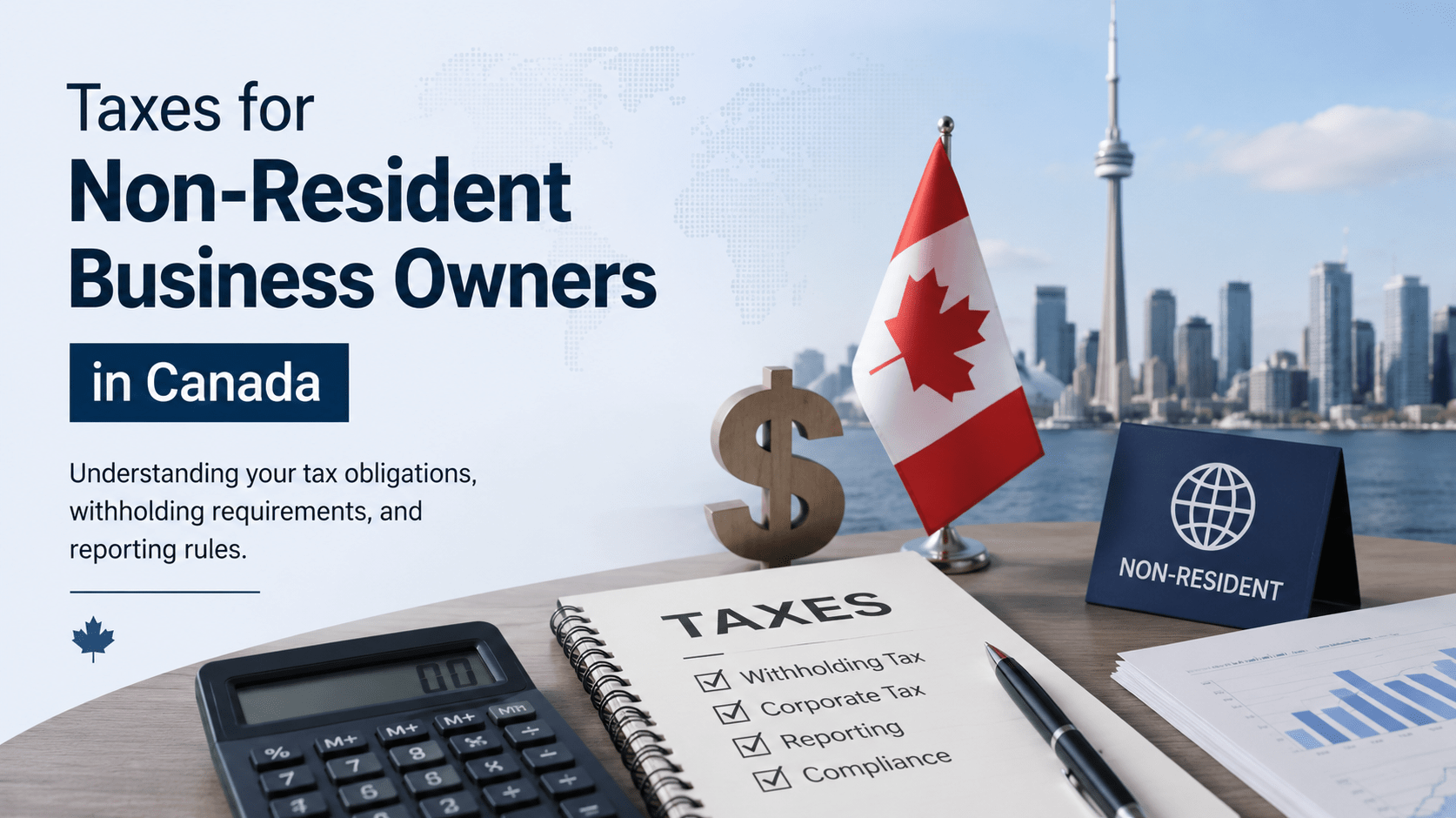
Taxes for Non-Resident Business Owners in Canada
Canada is one of the most popular destinations for entrepreneurs and international businesses looking to expand globally. With a strong economy, growing ecommerce market, and business-friendly environment, many non-resident entrepreneurs choose to establish businesses in Canada.
However, understanding the Canadian tax system is extremely important before starting operations. Non-resident business owners may have different tax obligations depending on their business structure, revenue, province, and business activities.
This guide explains the key taxes, filing requirements, and compliance responsibilities for non-resident business owners in Canada.
Understanding Non-Resident Business Ownership in Canada
A non-resident business owner generally refers to an individual or entity operating a Canadian business while residing outside Canada.
Non-resident entrepreneurs commonly operate:
• Ecommerce businesses
• Consulting firms
• Import-export companies
• Technology startups
• Wholesale businesses
• Service-based businesses
Tax obligations depend on factors such as:
• Business structure
• Physical presence in Canada
• Revenue generation
• Province of operation
• Nature of business activities
Common Business Structures and Taxation
Sole Proprietorship
A sole proprietorship is owned and operated by one individual.
Tax Considerations
• Business income is generally linked to the owner personally
• Simpler reporting structure
• Lower administrative requirements
This structure is often used by freelancers and small service providers.
Partnership
A partnership involves two or more business owners.
Tax Considerations
• Income is usually shared between partners
• Partners report their portion of income separately
• Partnership agreements may affect tax allocation
Corporation
A corporation is a separate legal entity from its owners.
Tax Considerations
• Separate corporate tax returns are required
• Additional compliance obligations apply
• Corporate tax planning opportunities may be available
Many non-resident entrepreneurs prefer corporations because they offer limited liability protection and stronger business credibility.
Corporate Taxes in Canada
Corporations operating in Canada are generally required to pay corporate income taxes.
Corporate taxes may include:
• Federal corporate tax
• Provincial corporate tax
Tax rates vary depending on:
• Province
• Business activities
• Revenue levels
• Business classification
Federal Corporate Tax
The federal applies taxes on taxable corporate income.
Certain businesses may qualify for deductions or incentives depending on their operations and eligibility.
Provincial Corporate Taxes
Each province may apply its own corporate tax rules and rates.
Popular business provinces include:
• Ontario
• British Columbia
• Alberta
• Quebec
Provincial tax obligations may vary significantly.
GST/HST Registration for Non-Resident Businesses
GST/HST is Canada’s sales tax system. Businesses selling taxable products or services may need GST/HST registration depending on their activities and revenue.
What Is GST?
GST stands for Goods and Services Tax.
What Is HST?
HST stands for Harmonized Sales Tax used in certain provinces.
When GST/HST Registration May Be Required
Businesses may need GST/HST registration if they:
• Sell taxable goods or services
• Exceed certain revenue thresholds
• Operate ecommerce businesses
• Import goods into Canada
Proper GST/HST compliance is important for avoiding penalties and future tax issues.
Ecommerce Business Taxes in Canada
Ecommerce businesses may have additional tax responsibilities depending on:
• Sales volume
• Marketplace operations
• Customer locations
• Product categories
Import and Export Tax Considerations
Businesses importing products into Canada may encounter:
• Customs duties
• Import taxes
• GST on imported goods
Tax obligations depend on:
• Product type
• Country of origin
• Applicable trade agreements
Import-export businesses should understand Canadian customs and tax regulations carefully.
Payroll Taxes and Employee Obligations
Businesses hiring employees in Canada may need payroll registration.
Payroll Responsibilities May Include
• Income tax deductions
• Payroll remittances
• Employment-related contributions
Employers must comply with Canadian payroll regulations and filing requirements.
Tax Filing Requirements for Corporations
Corporations generally need to file:
• Annual corporate tax returns
• Financial statements
• GST/HST returns (if registered)
• Payroll filings (if applicable)
Late filings may result in penalties and interest charges.
Permanent Establishment and Tax Residency
Tax obligations may depend on whether a business has a permanent establishment in Canada.
Factors may include:
• Office presence
• Employees in Canada
• Warehousing
• Revenue-generating activities
Understanding permanent establishment rules is important for international businesses.
Importance of Proper Bookkeeping
Accurate bookkeeping helps businesses:
• Track income and expenses
• Prepare tax filings
• Maintain compliance
• Avoid reporting errors
Businesses should maintain organized financial records throughout the year.
Common Tax Mistakes Non-Resident Businesses Make
Ignoring GST/HST Requirements- Some businesses fail to register when legally required.
Poor Financial Recordkeeping- Incomplete records can create compliance and reporting problems.
Missing Filing Deadlines- Late filings may lead to penalties and interest charges.
Mixing Personal and Business Finances- Using separate business accounts helps maintain proper financial organization.
Not Understanding Provincial Tax Rules- Tax obligations can vary significantly between provinces.
Why Professional Tax Guidance Matters?
Canadian tax regulations can be complex for international entrepreneurs.
Professional guidance can help businesses with:
Corporate tax planning
GST/HST compliance
Payroll setup
Financial reporting
Filing obligations
Good compliance practices support smoother business operations and long-term growth.
How Complete Consulting Canada Can Help?
Complete Consulting Canada helps businesses with:
• Compliance support
• Ecommerce business guidance
• Business consulting
• Corporate setup assistance
Professional support can help businesses avoid costly compliance mistakes and streamline operations.
Final Thoughts
Understanding taxes is one of the most important parts of operating a business in Canada as a non-resident entrepreneur.
From corporate taxes and GST/HST registration to payroll obligations and filing requirements, businesses must carefully manage compliance responsibilities.
Businesses that maintain accurate records, follow filing deadlines, and understand Canadian tax regulations can build stronger long-term operations in the Canadian market.
Frequently Asked Questions
Yes, businesses operating in Canada may have tax obligations depending on their activities, revenue, and business structure.
Corporations may need to pay federal and provincial corporate income taxes.
Businesses selling taxable goods or services may need GST/HST registration depending on revenue thresholds and operations.
Yes, ecommerce businesses may have tax obligations related to sales, imports, and marketplace operations.
Late filings may result in penalties, interest charges, and compliance issues.
Businesses hiring employees in Canada may need payroll registration and related tax accounts.
Proper bookkeeping helps businesses maintain compliance, prepare tax filings, and manage financial reporting accurately.