
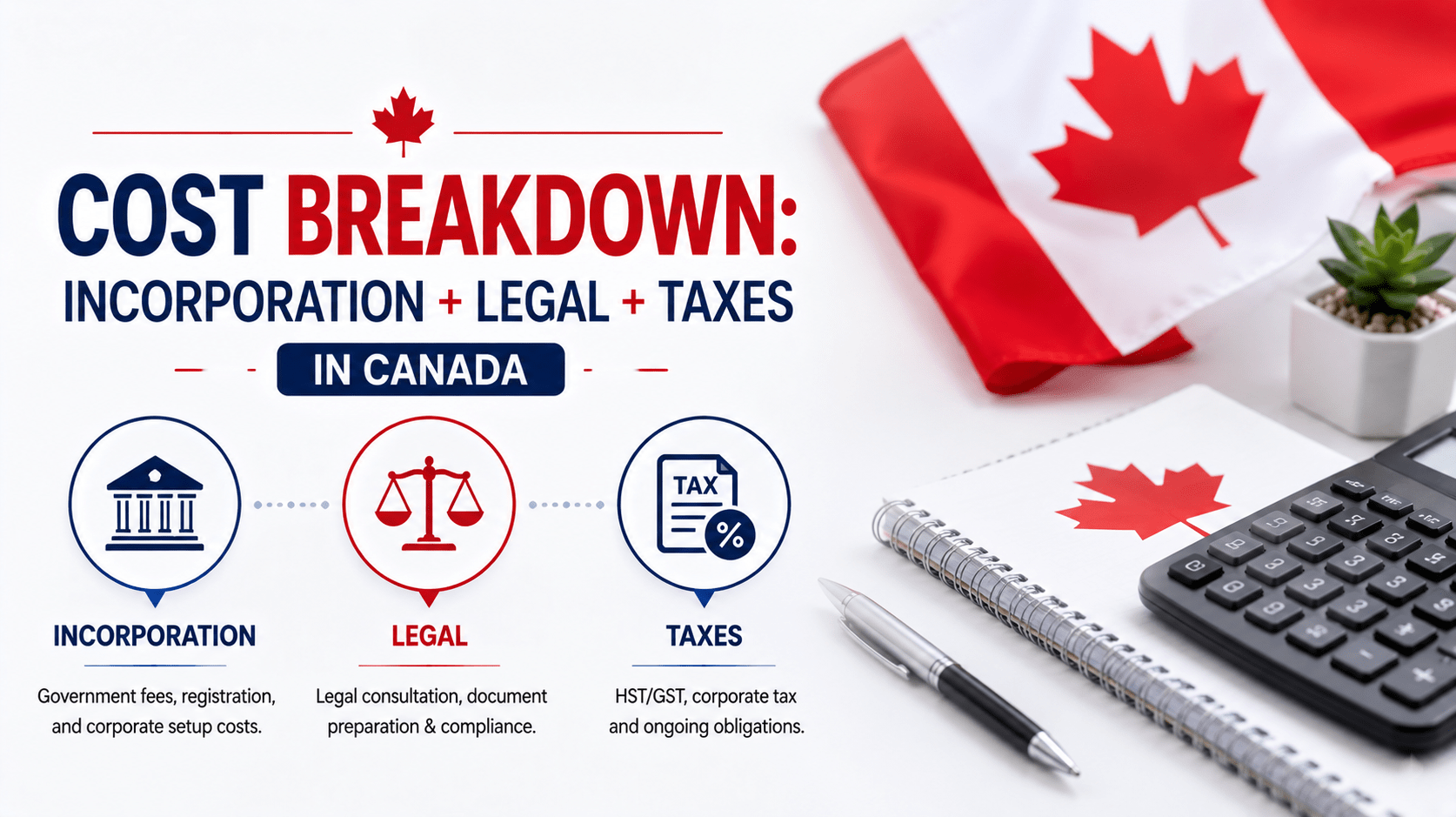
Cost Breakdown: Incorporation + Legal + Taxes in Canada
Starting a business in Canada is an exciting step for entrepreneurs and international business owners, but understanding the actual costs involved is essential before getting started. Many people assume incorporation is only about registration fees, but the reality is that there are additional legal, tax, and compliance expenses that should be considered from the beginning.
Whether you are a startup founder, consultant, e-commerce seller, or international entrepreneur, knowing the complete cost breakdown helps you plan your budget more effectively and avoid unexpected expenses later.
Incorporation Costs in Canada
The first major expense is the incorporation process itself. The total cost depends on whether you choose federal or provincial incorporation and whether you complete the process yourself or use professional services.
Federal incorporation usually includes filing fees and provides business name protection across Canada. Provincial incorporation costs may vary depending on the province where the business is registered.
In addition to registration fees, businesses often pay for:
• NUANS name search reports
• Corporate documentation
• Articles of incorporation
• Business number registration
• GST/HST registration if required
Entrepreneurs who use incorporation consultants or legal professionals may pay additional service fees, but this often simplifies the process and reduces compliance mistakes.
Legal Costs for Businesses
Legal expenses are another important part of the business setup process. While small businesses sometimes start with minimal legal support, professional guidance can help avoid larger problems in the future.
Legal costs may include:
• Drafting shareholder agreements
• Partnership agreements
• Employment contracts
• Terms and conditions for websites
• Privacy policies
• Trademark registration
• Business compliance reviews
The total legal cost depends on the complexity of the business structure and the services required. Startups with multiple founders or investors typically require more detailed legal documentation compared to sole-owner corporations.
For businesses planning long-term growth, legal protection is an important investment rather than an optional expense.
Accounting and Tax Expenses
Once a business is incorporated, ongoing accounting and tax responsibilities become part of regular operations. Every Canadian corporation must maintain financial records and file annual corporate tax returns.
Common accounting and tax-related expenses include:
• Corporate tax filing
• Bookkeeping services
• Payroll management
• GST/HST filings
• Financial statements
• Tax planning consultations
The costs vary depending on business size, transaction volume, and whether accounting is managed internally or outsourced to professionals.
For small businesses, bookkeeping software may help reduce expenses initially, but many growing companies prefer working with accountants to ensure compliance and accurate financial management.
Annual Compliance Costs
Incorporated businesses in Canada must also meet annual compliance requirements. These ongoing obligations are important to keep the corporation active and legally compliant.
Annual costs may include:
• Annual corporate filings
• Registered office services
• Accounting renewals
• Legal updates
Missing compliance deadlines can lead to penalties or even business dissolution, which is why many companies work with consultants to manage yearly requirements.
Hidden Costs Entrepreneurs Often Miss
Many new business owners focus only on incorporation fees and overlook additional operational costs. However, there are several hidden expenses that can impact the overall business budget.
These may include:
• Business banking fees
• Payment gateway charges
• Insurance costs
• Website development
• Virtual office services
• International transaction fees
• Marketing and branding expenses
For non-resident entrepreneurs, there may also be additional costs related to banking documentation, international tax consultations, or remote business management services.
Planning for these expenses early can help businesses avoid financial pressure during the first year of operations.
Is Professional Assistance Worth the Cost?
Many entrepreneurs wonder whether they should incorporate on their own or hire professionals. While self-incorporation may reduce initial expenses, professional guidance can help prevent costly mistakes related to taxes, compliance, legal structure, and documentation.
Consultants, accountants, and legal professionals can also help businesses choose the right incorporation structure based on growth goals and future expansion plans.
For international entrepreneurs especially, expert support can simplify cross-border compliance and ensure smoother operations.
Conclusion
The total cost of starting and maintaining a corporation in Canada involves more than just incorporation fees. Legal support, accounting services, tax compliance, and annual maintenance all play important roles in running a successful business.
Understanding these costs in advance helps entrepreneurs create realistic budgets and make informed business decisions. While expenses may vary depending on business type and complexity, investing in proper incorporation, legal protection, and tax planning can support long-term stability and growth.
For entrepreneurs planning to start a business in Canada, working with experienced professionals can make the process smoother, more compliant, and more efficient from day one.
✨ Complete Consulting Canada simplifies incorporation, legal, and tax processes with expert guidance and reliable business support across Canada.
Frequently Asked Questions
The cost depends on whether the business is federally or provincially incorporated and whether professional services are used during the process.
No, but legal assistance is highly recommended for businesses with multiple owners, investors, or complex operations.
Yes, every incorporated business in Canada must file annual corporate tax returns and maintain financial records.
usinesses may have ongoing expenses related to accounting, annual filings, payroll, legal compliance, and business banking.
Yes, many provinces allow non-residents to incorporate businesses in Canada, although requirements may vary.
Small businesses may initially use accounting software, but professional accounting support becomes valuable as operations grow and tax requirements become more complex.