
Recent Posts
- Complete Checklist to Start a Business in Canada
- Best industries to start a business in Canada
- Common Mistakes Foreigners Make When Starting a Business in Canada
- GST/HST Registration in Canada Explained
- How to Hire Employees in Canada as a Foreigner
- Cost Breakdown: Incorporation + Legal + Taxes in Canada
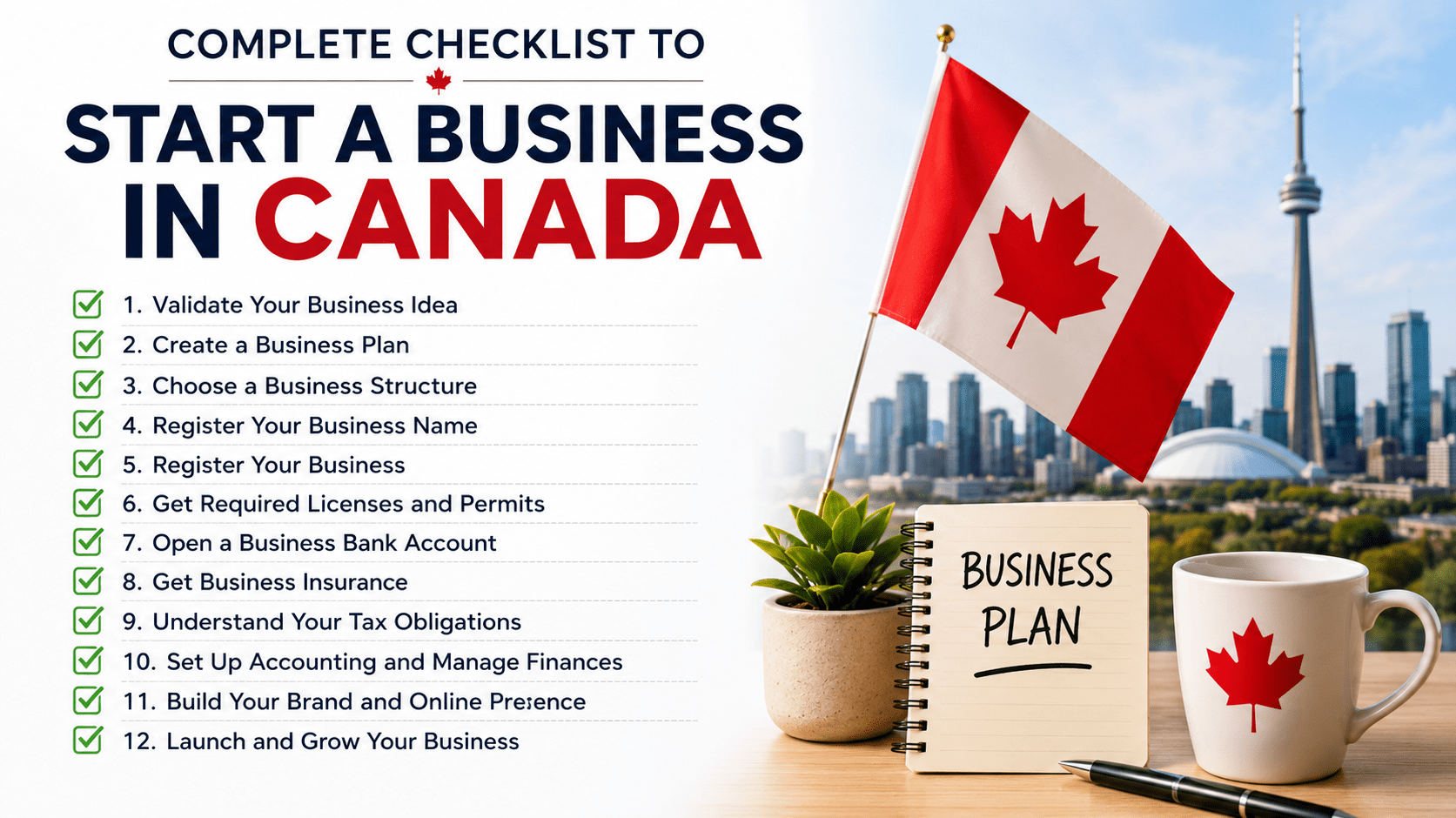
Complete Checklist to Start a Business in Canada
Starting a business in Canada can be an exciting opportunity for entrepreneurs, startups, and international investors. Canada offers a stable economy, strong legal framework, skilled workforce, and access to global markets, making it one of the best countries for business growth. However, launching a business successfully requires proper planning, legal compliance, and financial preparation.
Many entrepreneurs focus only on registering a company, but building a successful business involves several important steps beyond incorporation. Having a clear checklist can help business owners avoid mistakes, stay compliant, and start operations more smoothly.
Choose the Right Business Idea
The first step in starting a business in Canada is selecting a business idea with strong market potential. Entrepreneurs should evaluate customer demand, competition, industry trends, and long-term profitability before investing time and money.
A business idea should align with your skills, experience, and future goals. Conducting proper market research helps identify opportunities and reduce risks before launching operations.
Understanding your target audience and pricing strategy is also essential for long-term success.
Create a Business Plan
A business plan acts as the foundation of your company. It outlines your business goals, services, target market, operational strategy, financial projections, and growth plans.
A strong business plan is especially important when applying for loans, attracting investors, or seeking partnerships. It also helps entrepreneurs make informed decisions during the early stages of business development.
Businesses with proper planning are generally more prepared for financial challenges and market competition.
Choose the Right Business Structure
Selecting the correct business structure is one of the most important legal decisions. In Canada, businesses commonly operate as sole proprietorships, partnerships, or corporations.
Each structure has different implications related to taxes, liability protection, ownership, and compliance requirements. Sole proprietorships are easier to manage, while corporations offer stronger liability protection and tax advantages for growing businesses.
Foreign entrepreneurs should also consider provincial regulations and residency requirements before choosing a structure.
Register Your Business
Once the structure is finalized, the business must be legally registered. Depending on the business type and location, entrepreneurs may choose federal or provincial incorporation.
Registration typically includes:
• Business name approval
• Articles of incorporation
• Business number registration
• Provincial registrations if required
Choosing a professional business name and ensuring its availability is an important part of the process.
Obtain Required Licenses and Permits
Certain businesses in Canada require licenses or permits before operations can begin. The requirements vary depending on the industry, province, and municipality.
Businesses involved in food services, healthcare, construction, transportation, or financial services may require additional approvals and compliance checks.
Operating without proper licenses can result in penalties or business interruptions, so verifying legal requirements early is essential.
Open a Business Bank Account
Separating personal and business finances is important for accounting, taxation, and financial management. Opening a dedicated business bank account helps businesses maintain organized financial records and improve professionalism.
Banks may require incorporation documents, business registration certificates, identification, and tax information during the account opening process.
For non-resident entrepreneurs, banking requirements may vary depending on the financial institution.
Register for Taxes
Businesses operating in Canada may need to register for various tax accounts. GST/HST registration becomes mandatory once taxable revenue exceeds the required threshold, although many businesses voluntarily register earlier.
Employers hiring staff must also set up payroll accounts for employee tax deductions and contributions.
Proper tax registration helps businesses remain compliant and avoid future penalties.
Set Up Accounting and Bookkeeping
Accurate bookkeeping is essential for managing finances, filing taxes, and tracking business performance. Many entrepreneurs underestimate the importance of organized accounting systems during the early stages of business setup.
Businesses should maintain records of:
• Sales and invoices
• Expenses
• Payroll
• Tax filings
• Banking transactions
Using accounting software or hiring professional accountants can help businesses manage financial operations more effectively.
Build Your Online Presence
In today’s digital market, having a professional online presence is extremely important. Businesses should create a website, establish social media profiles, and develop branding strategies before launching services.
A strong online presence improves credibility, visibility, and customer engagement. Search engine optimization (SEO), digital marketing, and local search visibility can also help businesses attract customers more efficiently.
For many startups, digital marketing plays a major role in early business growth.
Understand Employment Requirements
Businesses planning to hire employees must understand Canadian employment laws and payroll obligations. Employment standards may vary by province and cover areas such as wages, overtime, vacation policies, and workplace safety.
Employers are also responsible for payroll deductions and tax remittances.
Proper HR policies and employment contracts help businesses remain legally compliant and maintain professional operations.
Seek Professional Guidance
Many entrepreneurs try to manage incorporation, taxes, accounting, and legal compliance independently. While this may reduce initial costs, mistakes during setup can create expensive problems later.
Working with experienced consultants, accountants, and legal professionals can simplify the process and help businesses avoid compliance issues.
Professional guidance is especially valuable for foreign entrepreneurs unfamiliar with Canadian business regulations.
Conclusion
Starting a business in Canada involves much more than registering a company name. From choosing the right business structure and registering taxes to setting up accounting and compliance systems, every step plays an important role in long-term success.
Canada offers excellent opportunities for entrepreneurs, but proper planning and professional support are essential for building a stable and successful business. Following a complete business checklist can help entrepreneurs launch operations smoothly while avoiding common mistakes and compliance risks.
Complete Consulting Canada is your trusted partner for starting a business in Canada. From choosing the right business structure and registering your company to understanding tax obligations and regulatory requirements, our team helps simplify every step of the process. Follow this complete checklist to launch your business with confidence and build a strong foundation for long-term success in Canada
Frequently Asked Questions
Yes, foreigners can legally own and operate businesses in Canada, depending on provincial regulations and business structures.
No, businesses can operate as sole proprietorships, partnerships, or corporations depending on their needs.
GST/HST registration usually becomes mandatory once revenue exceeds the required threshold, although voluntary registration is possible earlier.
The timeline depends on the business structure, province, and registration process selected.
Yes, a business plan helps entrepreneurs organize operations, attract funding, and plan long-term growth strategies.
Professional guidance can help businesses avoid legal, tax, and compliance mistakes during the setup process.