
Recent Posts
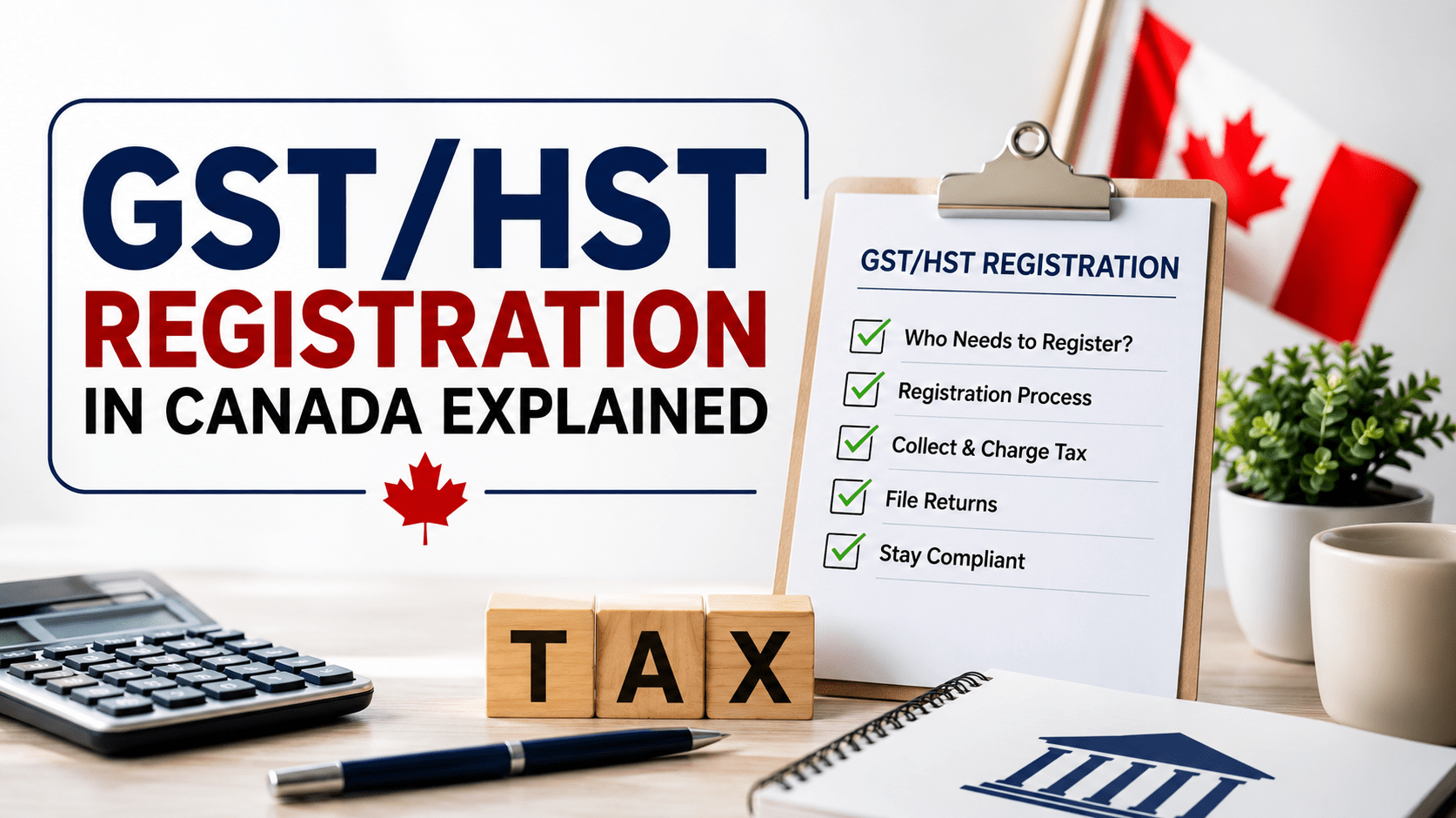
GST/HST Registration in Canada Explained
Starting a business in Canada comes with several legal and tax responsibilities, and one of the most important is GST/HST registration. Many entrepreneurs, startups, freelancers, and international business owners are often confused about when registration is required, how it works, and what responsibilities come after registration.
Understanding GST/HST is essential for staying compliant with Canadian tax laws and avoiding future penalties. Whether you are running a small business, offering services, selling products online, or operating a Canadian company remotely, knowing the basics of GST/HST registration can help your business operate smoothly.
What is GST/HST?
GST stands for Goods and Services Tax, while HST stands for Harmonized Sales Tax. These are consumption taxes charged on most goods and services sold in Canada.
The federal GST rate is generally 5%, while HST combines the federal and provincial portions into a single tax rate in certain provinces. The applicable tax rate depends on where the customer is located.
Businesses registered for GST/HST are responsible for collecting tax from customers and remitting it to the Canada Revenue Agency (CRA).
Who Needs to Register for GST/HST?
In Canada, businesses usually need to register for GST/HST once their taxable revenue exceeds the small supplier threshold. This threshold is generally CAD 30,000 in total taxable revenue over four consecutive calendar quarters.
Once a business crosses this limit, GST/HST registration becomes mandatory.
However, many businesses choose voluntary registration even before reaching the threshold because it allows them to claim Input Tax Credits (ITCs) on eligible business expenses.
Businesses that commonly register include:
• Consultants
• E-commerce sellers
• Import/export businesses
• Agencies and service providers
• Corporations and startups
• Non-resident businesses operating in Canada
Benefits of GST/HST Registration
Although tax compliance may seem complicated at first, GST/HST registration can actually provide several business advantages.
One major benefit is the ability to recover GST/HST paid on eligible business purchases through Input Tax Credits. This can reduce overall operating costs and improve cash flow.
GST/HST registration can also increase business credibility because many clients and suppliers view registered businesses as more professional and established.
For growing companies, early registration may help simplify accounting processes as revenue increases over time.
How to Register for GST/HST
Businesses can register for GST/HST through the Canada Revenue Agency (CRA). Registration may be completed online, by phone, or with the help of accountants or business consultants.
During registration, businesses receive a GST/HST number linked to their CRA business account. Once registered, the business is legally required to charge applicable taxes on taxable goods and services.
The registration process usually requires:
• Business number
• Legal business name
• Business activity details
• Revenue estimates
• Business structure information
Choosing the correct reporting period is also important because businesses may need to file monthly, quarterly, or annual GST/HST returns depending on revenue levels.
Responsibilities After Registration
After registering, businesses must collect GST/HST from customers and maintain proper financial records. Businesses are also responsible for filing GST/HST returns and remitting collected taxes to the CRA by the required deadlines.
Proper bookkeeping becomes very important after registration. Businesses should track:
Sales and invoices
Tax collected
Business expenses
Input Tax Credits
GST/HST payments and filings
Late filings or incorrect reporting can lead to penalties and interest charges, which is why many businesses use accounting software or work with professional accountants.
GST/HST for Non-Resident Businesses
Many non-resident entrepreneurs operating Canadian businesses may also need GST/HST registration. This depends on the type of products or services offered, customer location, and business activities conducted in Canada.
E-commerce businesses, digital service providers, and foreign corporations selling to Canadian customers may have GST/HST obligations even if the owner lives outside Canada.
Because international tax situations can be complex, professional guidance is highly recommended for non-resident businesses.
Common Mistakes Businesses Should Avoid
One common mistake is waiting too long to register after crossing the revenue threshold. Businesses that fail to register on time may still owe taxes retroactively, even if they did not collect them from customers.
Another issue is poor bookkeeping. Without accurate records, businesses may struggle with tax filings or miss eligible Input Tax Credits.
Many businesses also incorrectly apply tax rates across provinces, especially when selling online across Canada.
Proper accounting systems and professional support can help prevent these costly errors.
Conclusion
GST/HST registration is an important part of running a compliant business in Canada. Whether registration is mandatory or voluntary, understanding the rules can help businesses manage taxes efficiently and avoid compliance issues.
From collecting taxes and filing returns to claiming Input Tax Credits, proper GST/HST management plays a key role in maintaining healthy business operations. For both Canadian residents and international entrepreneurs, professional guidance can simplify the registration process and ensure long-term compliance.
Complete Consulting Canada is your trusted partner for GST/HST registration and business compliance in Canada. Our experienced team helps entrepreneurs, investors, and business owners navigate the registration process with confidence, ensuring accuracy, compliance, and peace of mind. 📈✨ Contact us today to get professional support and keep your business on the right track for success in Canada.
Frequently Asked Questions
GST is the federal Goods and Services Tax, while HST combines federal and provincial sales taxes into one system in certain provinces.
Businesses usually must register once taxable revenue exceeds CAD 30,000 over four consecutive quarters.
Yes, businesses can voluntarily register even before reaching the revenue limit.
ITCs allow businesses to recover GST/HST paid on eligible business expenses.
In some cases, yes. Non-resident businesses selling taxable goods or services in Canada may have registration obligations.
Filing frequency depends on business revenue and may be monthly, quarterly, or annually.